

Corvette Driver Modes Explained
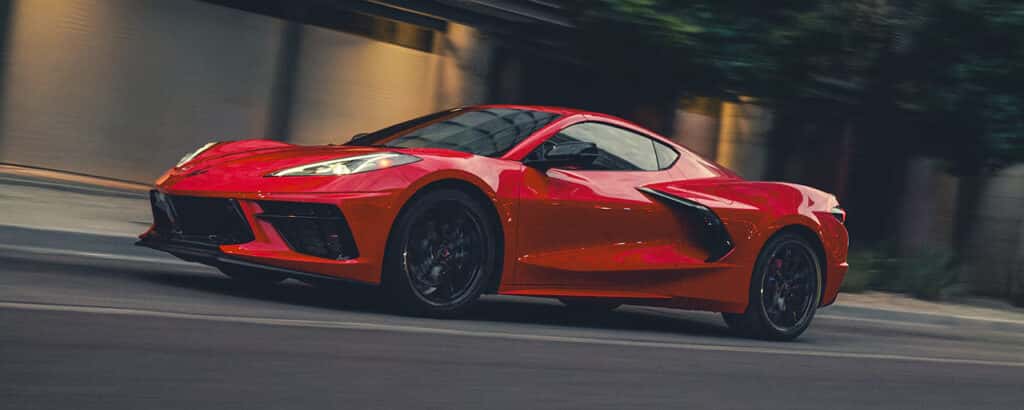
Chevrolet Corvette driver modes let you change how the car responds without changing the car itself. One press can move you from a relaxed commute to something sharper on a good stretch of road. If you’re shopping the new Corvette at Don Mealey Chevrolet, knowing what each mode does helps you compare models with confidence. Here’s a plain-language walkthrough, including what the 2026 Stingray offers.
Mode names, availability and behavior vary by model year and trim. Check Chevrolet’s owner’s manual or confirm with us before you rely on any setting.
How Chevrolet Corvette Driver Modes Work
Think of modes as driving profiles. They tailor the Corvette’s character to conditions and preferences, but they can’t add grip, brakes or horsepower beyond what the hardware already has.
What the Drive Mode Selector Controls
Depending on the mode, the selector can influence accelerator response, steering, suspension and transmission behavior, plus exhaust sound, engine response and brake feel on some setups. For 2026, Chevrolet redesigned the selector and placed it in line with the gear selector. On the 2026 Stingray, the standard selector offers Tour, Sport, Track, Weather and MyMode. Z Mode is activated separately with a steering-wheel button.
Why Available Modes Vary by Corvette Model and Equipment
Not every Corvette offers the same choices. My Mode adjustments vary by vehicle and trim. Performance Traction Management is a separate system layered beneath the main modes, and it depends on equipment. For 2026, Chevrolet lists it on the Stingray Z51 with Magnetic Selective Ride Control, along with the Z06, E-Ray, ZR1 and ZR1X. The 2027 list swaps in Grand Sport and Grand Sport X alongside the Z51 with Magnetic Ride, Z06, ZR1 and ZR1X.
PTM progresses through its own settings rather than the Tour-to-Track ladder, moving from wet-surface calibrations through dry and sport settings up to the race and Pro levels. Each step reduces how much the electronics intervene. Confirm the exact setting names on the specific car you’re considering, since PTM was revised for 2026.
Weather Mode: Traction and Confidence on Wet Florida Roads
Weather Mode works much like a Snow/Ice Mode. It helps control wheel speed on slippery surfaces by adjusting throttle progression and transmission shifts. When a Florida downpour hits in Clermont or anywhere around Orlando, the car delivers power in a more measured way.
Tire grip doesn’t change, though. Speed, following distance and attention still matter most. Don’t confuse this mode with the PTM Wet setting, which is meant for a wet racetrack.
Best For: Wet commutes and slick pavement.
Tour Mode: The Everyday Street Setting
We start with Tour when we explain the modes. It’s built for everyday driving and tuned for fuel economy and drive quality. It’s the most economical setting and the default when no other mode is selected.
Best For: Daily driving.
What Changes in Throttle, Steering, Exhaust and Suspension
Compared with Sport, Tour gives calmer throttle response and more relaxed steering, along with a more comfort-minded suspension calibration. Exhaust sound is configurable rather than fixed by mode, so a Corvette in Tour can be as quiet or as vocal as you’ve set it.
When Tour Mode Makes the Most Sense
Tour fits stop-and-go traffic and highway miles just as well as errands. On a commute along the 408, the 429 or US-27, comfort and predictable responses matter more than a heightened feel. For most trips, it’s the right answer.
Sport Mode: Sharper Response for Spirited Driving
Sport is a strong middle ground. The car feels more responsive and engaging while still making sense on the street. You can enjoy it without ever selecting Track Mode.
Best For: Back roads and dry, spirited drives.
Throttle, Transmission and Steering Changes
Sport tightens steering response and sharpens throttle responsiveness. On the 2026 Stingray, the transmission also gets more aggressive shifts and the steering a sportier feel. It suits dry roads, so a clear run on US-27 or a quiet back road outside Clermont is a natural fit. Obey traffic laws every time.
Exhaust Note, Suspension Firmness and Traction Settings
Sport makes suspension calibration more responsive using hydraulic dampers, and on the 2026 Stingray it firms the suspension. Exhaust is different. It’s a configurable MyMode setting, so Sport doesn’t set a specific exhaust sound. With PTM equipped, selecting Sport and pressing the traction-control button twice brings up “ESC COMPETITIVE MODE” in the Driver Information Center. Electronic stability control (ESC) is the system that helps keep the car pointed where you steer. Treat Competitive Mode as closed-course only.
Track Mode: Performance Settings for Closed-Course Use
Track Mode is intended for closed racetracks where maximum handling is wanted. Braking, aero and tire capability stay as they are, since those depend on your Corvette’s equipment.
Best For: Closed course only.
Chevrolet warns that high-performance features are meant for closed tracks and experienced, qualified drivers. Public roads are off limits. Aggressive inputs can cause loss of control and serious injury or death. Chevrolet also recommends a 1,500-mile break-in period on all Corvette models, with no track events or sport driving schools during that time.
What Track Mode Changes in the Car
Transmission and steering behave similarly to Sport, while the accelerator is calibrated for maximum control rather than maximum response. Select Track for closed-course or competitive driving, or reach the same settings through the steering-wheel Z Mode button.
On PTM-equipped cars, 2026 brings a new PTM Pro Mode. Chevrolet’s description is worth understanding precisely: Pro fully disables traction and stability control, and it lets an advanced driver move between PTM-assisted and fully unassisted driving without dropping out of PTM. ABS stays active throughout. Chevrolet also warns against using Engine Sound Management’s Stealth setting on track, since it can damage the exhaust valve actuators.
My Mode and Z Mode: Building a Custom Setup
Presets don’t suit everyone. Some drivers want Tour comfort with a louder exhaust, or sharper steering with a soft ride. My Mode is an everyday profile you build yourself, and Z Mode is a quick-access, driver-configurable performance profile on select high-performance vehicles.
Which Settings You Can Customize
The two custom modes differ in scope. My Mode adjusts four characteristics, built for everyday use: steering feel, suspension, engine sound, and exhaust. Z Mode adjusts six, adding brake feel and Performance Traction Management on top of engine and shift behavior, steering, suspension, and engine sound.
That difference is the point. My Mode is where you build the car you commute in. Z Mode is where you build the car you take to a track day, and the PTM parameter is what makes it a track tool rather than a preference setting.
One useful quirk: My Mode holds its settings through a restart rather than reverting to Tour the way most modes do. Build it once and it’s there the next morning.
Example Setups for Commuting, Back Roads and Track Days
These are personal starting points and don’t come from Chevrolet:
- Commuting: quieter exhaust sound and lighter steering feel, with comfort suspension
- Back roads: louder exhaust sound, firmer steering feel, firmer suspension where adjustable
- Track day (closed course only): Z Mode with a track-oriented PTM setting, quicker engine response, firmer brake feel and steering feel
Still weighing options? Our pre-owned vehicles selections can be a useful way to compare how different model years handle these controls.
Choosing the Right Mode for Your Drive
Choose by road conditions and purpose first, then by the response and sound you enjoy. A more aggressive mode isn’t automatically better. Weather suits rainy days, Tour handles most everything else, and Sport is there for an engaging dry drive. Keep Track for a closed course. If you’re eyeing the Corvette Stingray 2026, our team can walk you through the selector on a test drive and help identify which trim has the equipment you want. Start with our new vehicles.
Common Questions About Changing Modes and Restart Behavior
Can I change modes while driving? Yes, modes can be changed while moving and don’t require Park.
Will a mode stay selected after I restart? My Mode holds, which is part of why it’s worth setting up. Most other modes return to Tour when you shut the car off. Confirm the behavior on your specific model year.
Does a mode affect fuel economy or warranty? Tour is the most economical setting. For specifics on fuel economy or warranty, see the owner’s manual or ask us.
Is Track Mode street-legal to use? No. It’s intended for closed racetracks, and public roads call for normal, lawful driving.
Browse Corvette Inventory at Don Mealey Chevrolet
Chevrolet Corvette driver modes differ by model and equipment, so compare individual cars rather than assuming they match. Browse our current Corvette inventory, then confirm features and try the modes on a test drive. We’re a franchise Chevrolet dealership in Clermont, FL, serving the greater Orlando area, at 17185 W State Road 50.
Contact Us and Plan Your Purchase
Contact us or call sales at (352) 432-1391. If you’re planning your purchase, ask about financing. After you buy, our service center has trained technicians ready to service your new Corvette.

0 comment(s) so far on Corvette Driver Modes Explained